
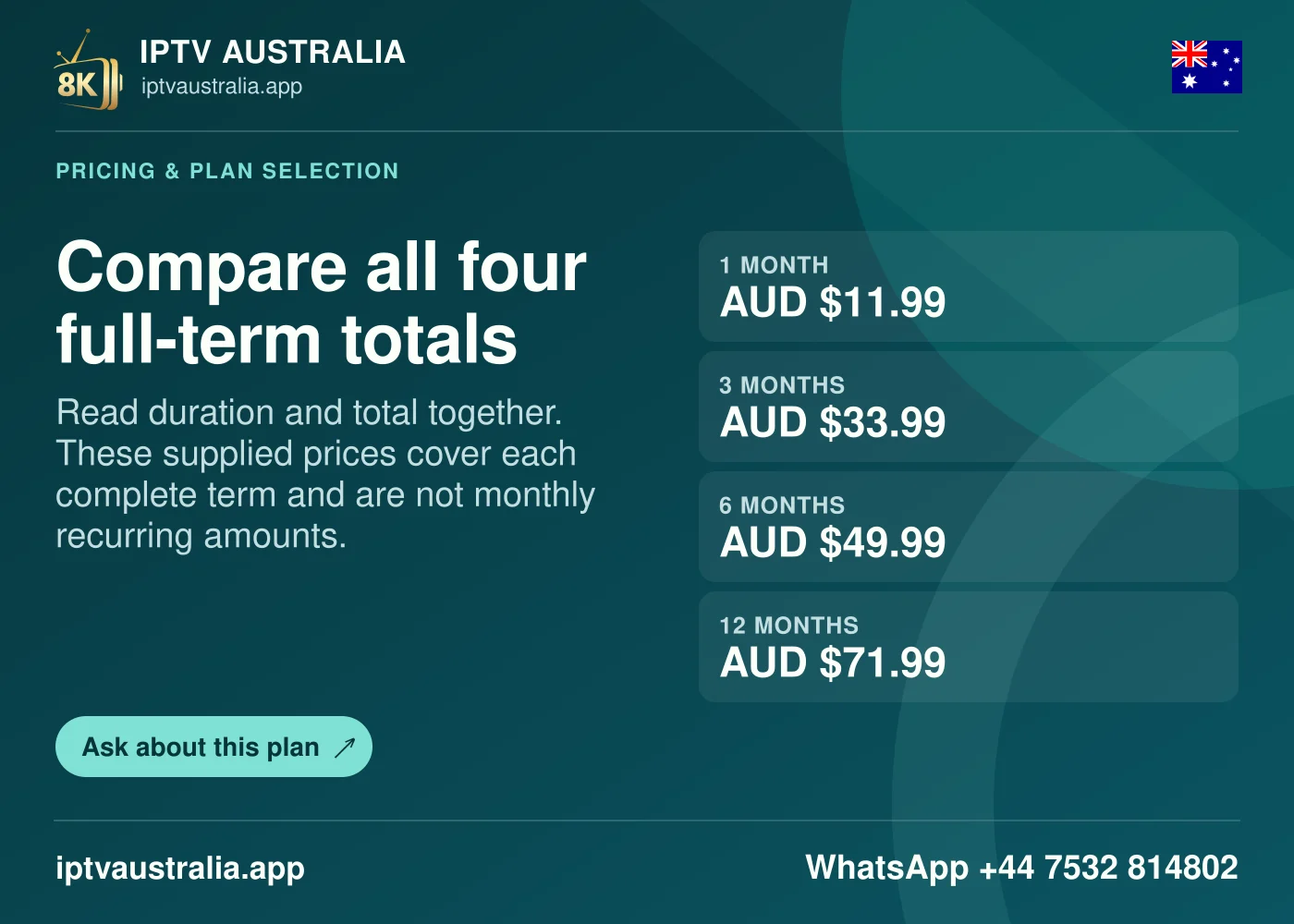
Start with the complete purchase
An advertised monthly equivalent is not always the amount payable. Record the currency, complete subscription term and total. Then keep a separate line for a player licence or another genuine charge. Comparing a one-month total with a twelve-month total as if they were the same purchase hides the commitment rather than explaining value.
| Comparison item | What to record |
|---|---|
| Subscription | Currency, full-term total, activation and expiry. |
| Player software | Publisher, platform, licence and any separate fee. |
| Connections | The actual simultaneous-use allowance for that account. |
| Renewal | Whether and how the existing account is extended. |
| Purchase conditions | The contracting seller, payment and refund conditions. |
A device name is not a compatibility result
Write down the exact model and operating system before comparing app claims. A manufacturer can use more than one TV platform. An external streaming device also has a software environment of its own. A seller saying “smart TV” has not yet answered whether your particular player can be installed on your particular set.
Use the trial as evidence
Run the test on the screen, player and connection you intend to use. Note the time, content sample and what happened. A working menu and a working stream are different observations. So are picture, audio, guide alignment and recovery after closing the player. Keep the observations instead of relying on a general impression that the interface looked good.
Look for an answer that can be checked
A precise account allowance is more useful than “unlimited”. A named app publisher is more useful than an unexplained download code. A dated package description is more useful than a channel-count badge without a counting method. The seller’s identity and written conditions should remain understandable when you get to the order.
Keep content permission separate from performance
A smooth stream or a familiar logo does not establish distribution permission. An account, player and broadcaster can belong to different organisations. Ask the supplier about the actual content, territory and intended use. Do not treat a technical trial as evidence for a legal or commercial right.
Make a comparison you can revisit
Use three columns for each important point: the stated term, its source and your own observation where a test applies. Mark an unanswered question as unanswered. That makes the decision easier to revisit if a plan changes or you replace a device. Avoid turning a simple checklist into a score that suggests more certainty than the evidence provides.
How this guide relates to IPTV Australia
This guide is published by IPTV Australia. It supplies a comparison method and links to the site’s supplied offers and device information. It does not report an independent hands-on comparison of competing providers. Use the same questions for any offer you consider, including the one on this website.
Questions about this guide
Should I choose only by the cheapest advertised price?
Compare the complete amount, term and account conditions first. A lower figure can describe a different duration, omit a player fee or leave an important condition unanswered.
Does a trial establish that every programme will always be available?
No. It supplies observations about the samples, account, device and connection tested at that time. Keep programme availability and future service conditions in the written agreement.